
US-Iran War Escalates: Trump Orders New Blockade as Iran Threatens Global Energy Supplies
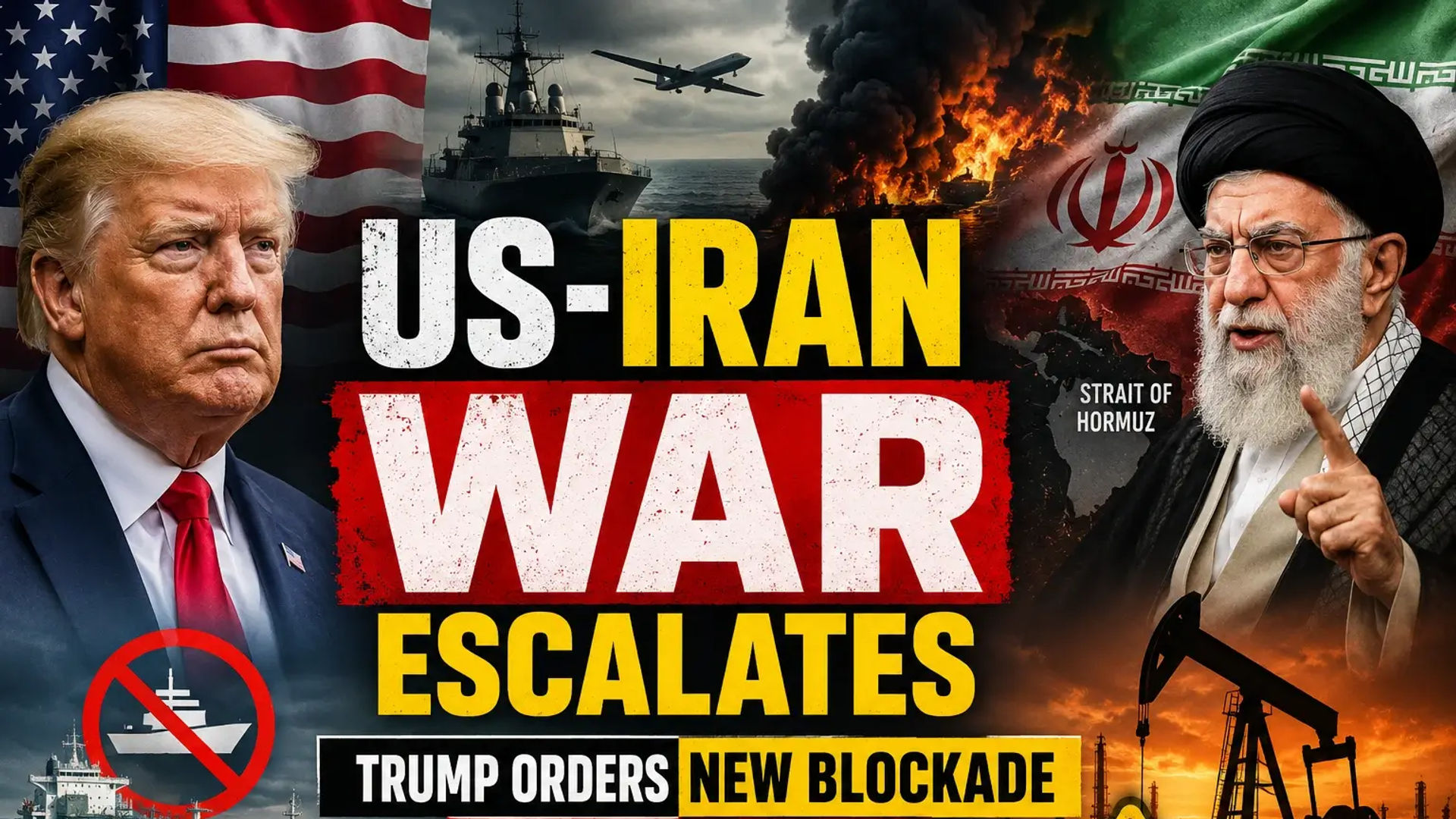
🔥 Rising Middle East Tensions Spark Global Oil Fears, Military Alerts, and Economic Uncertainty
Published: July 15, 2026
📖 Introduction
A dramatic new chapter has emerged in the long-running tensions between the United States and Iran. President Donald Trump has ordered a renewed maritime blockade aimed at limiting Iran's ability to transport oil and military supplies, while Iranian officials have responded with warnings that any escalation could threaten the stability of global energy supplies.
The renewed confrontation is sending shockwaves through international markets. Oil prices climbed as investors reacted to fears that shipping routes in the Persian Gulf could become unsafe. Governments across Europe and Asia are closely monitoring developments because nearly one-third of the world's seaborne oil trade depends on uninterrupted access to Middle Eastern waterways.
Military analysts warn that even limited naval clashes could have worldwide consequences, affecting fuel prices, inflation, shipping costs, and international security.
⚔️ Trump Announces Expanded Maritime Blockade
President Donald Trump announced that U.S. naval forces would intensify operations aimed at preventing Iran from transporting weapons, military equipment, and sanctioned petroleum shipments.
According to administration officials, the objective is to increase economic pressure while limiting Iran's ability to support allied militant organizations operating across the Middle East.
Key measures reportedly include:
- 🚢 Expanded naval patrols
- ⚓ Increased inspections of suspicious cargo vessels
- 🛰️ Enhanced satellite surveillance
- ✈️ Greater aerial reconnaissance
- 🤝 Cooperation with allied naval forces
The White House argues these actions are designed to protect international security rather than provoke direct military conflict.
📊 Major Elements of the New U.S. Strategy
⚡ Iran Responds With Strong Warning
Iranian officials quickly condemned the U.S. decision, describing the blockade as an act of economic aggression.
Government representatives warned that continued military pressure could force Iran to reconsider how it responds in strategically important waterways.
Although officials stopped short of announcing immediate action, they emphasized that Iran possesses multiple options to defend what it considers its national interests.
Military commanders also reiterated that any interference with Iranian shipping would receive an "appropriate response."
The statements immediately raised concerns among international shipping companies operating in the Gulf.
🌍 Why the Strait of Hormuz Matters
The Strait of Hormuz remains one of the world's most strategically important waterways.
Every day, millions of barrels of crude oil and liquefied natural gas pass through this narrow shipping corridor connecting the Persian Gulf with international markets.
Any disruption—even temporary—can create significant consequences for the global economy.
🌎 Countries Highly Dependent on Hormuz
📰 Related News You Should Read




Because of this dependence, energy analysts closely monitor every military development in the region.
📈 Oil Markets React Immediately
Financial markets responded within hours of the announcement.
Energy traders began pricing in the possibility of future supply disruptions, causing oil futures to rise sharply.
Investors also shifted money toward traditionally safer assets such as:
- 🥇 Gold
- 💵 U.S. Dollar
- 📈 Defense stocks
- ⚡ Energy companies
Meanwhile, airline stocks and transportation companies experienced increased volatility due to concerns about rising fuel costs.
🚢 Shipping Companies Increase Security
Several international shipping firms announced enhanced security measures for vessels operating in or near the Persian Gulf.
These include:
- 👮 Additional onboard security personnel
- 📡 Continuous satellite monitoring
- 🚢 Route adjustments
- 📞 Constant communication with naval authorities
Insurance companies are also reviewing maritime risk premiums, which could increase transportation costs worldwide.
🌐 International Community Calls for Calm
Governments across Europe, Asia, and the Middle East urged both Washington and Tehran to avoid actions that could trigger wider conflict.
Diplomatic officials emphasized that protecting international shipping lanes remains essential for maintaining global economic stability.
Several countries have offered to facilitate dialogue in hopes of reducing tensions before they escalate further.
⚔️ Military Presence Expands Across the Persian Gulf
As tensions rise, the United States has increased its military presence throughout the Persian Gulf. Defense officials say the deployment is intended to protect commercial shipping lanes, reassure regional allies, and deter any attacks on international vessels.
Military analysts report increased activity involving:
- 🚢 Aircraft carrier strike groups
- ⚓ Guided-missile destroyers
- ✈️ Surveillance aircraft
- 🛰️ Intelligence satellites
- 🚁 Maritime patrol helicopters
- 🛡️ Air-defense systems at regional bases
Iran has also reportedly strengthened its coastal defense network, naval patrols, missile readiness, and drone surveillance near strategic waterways.
Although both sides claim they are acting defensively, experts warn that even a small misunderstanding at sea could escalate into a larger confrontation.
📊 U.S. and Iran Military Posture Comparison
🛢️ Why Global Oil Markets Are So Sensitive
The Middle East remains one of the world's most important energy-producing regions. Any military confrontation affecting oil exports can rapidly influence prices around the globe.
Investors become nervous because oil markets react not only to actual supply disruptions but also to the possibility of future disruptions.
Factors influencing prices include:
- ⛽ Reduced crude exports
- 🚢 Shipping delays
- 📈 Higher insurance costs
- ⚠️ Geopolitical uncertainty
- 💵 Currency fluctuations
- 📦 Supply chain interruptions
Even rumors of conflict can trigger significant price movements in international energy markets.
🌎 How Higher Oil Prices Could Affect Americans
If oil prices continue rising, U.S. consumers may notice higher costs across multiple sectors.
Potential Impacts
🚗 Gasoline Prices
- More expensive fuel at the pump.
✈️ Air Travel
- Airlines may increase ticket prices due to higher jet fuel costs.
🚚 Transportation
- Trucking companies could pass increased fuel expenses to businesses.
🛒 Consumer Goods
- Shipping costs may contribute to higher retail prices.
🏠 Household Expenses
- Heating and utility costs could increase in some regions.
While the exact impact depends on how long tensions continue, economists say prolonged instability often contributes to inflationary pressure.
📊 Possible Economic Effects
💰 Global Stock Markets Respond
Financial markets generally dislike uncertainty, and geopolitical tensions often lead to rapid market reactions.
Following the latest developments:
📈 Energy companies gained as investors anticipated stronger oil prices.
🛡️ Defense contractors attracted attention because governments may increase military spending.
📉 Airline and travel-related stocks faced pressure from concerns about fuel expenses.
🥇 Gold prices strengthened as investors sought traditional safe-haven assets.
💵 The U.S. dollar also received support as many global investors shifted toward relatively safer investments during periods of uncertainty.
Market experts emphasize that investor sentiment may continue changing rapidly as new developments emerge.
🌍 Reactions From America's Allies
Many U.S. allies expressed concern about the growing tensions while emphasizing the importance of maintaining freedom of navigation.
Several governments encouraged diplomatic engagement instead of military escalation.
Key international priorities include:
- 🤝 Preventing regional war
- 🚢 Keeping global shipping lanes open
- ⛽ Protecting energy supplies
- 🌐 Maintaining economic stability
- 🕊️ Supporting diplomatic negotiations
Countries heavily dependent on imported energy are particularly focused on avoiding disruptions to oil exports from the Gulf.
🛰️ Intelligence and Cybersecurity Become Critical
Beyond traditional military operations, intelligence agencies are closely monitoring cyber threats and information warfare.
Experts warn that future tensions may involve:
- 💻 Cyberattacks on infrastructure
- 📡 GPS interference
- 🛰️ Electronic warfare
- 🔐 Attacks targeting energy facilities
- 🌐 Disinformation campaigns
Governments and private companies are strengthening cybersecurity measures to protect critical systems.
🌍 Worst-Case Scenarios if the Conflict Escalates
While both Washington and Tehran continue to state that they want to protect their national interests, defense experts caution that any direct military confrontation could have consequences far beyond the Middle East.
A broader conflict could affect global trade, energy supplies, financial markets, and regional security. Military analysts note that even a limited naval clash or missile exchange could increase instability across the Gulf.
Possible Escalation Scenarios
- 🚢 Temporary disruption to commercial shipping in the Persian Gulf.
- 🛢️ Reduced oil exports from Gulf producers due to security concerns.
- 🚀 Missile or drone attacks targeting military installations or strategic infrastructure.
- 📈 A sharp rise in global oil and natural gas prices.
- 📉 Increased volatility in international stock markets.
- 🌍 Greater diplomatic involvement by major world powers.
Although these possibilities are widely discussed by analysts, they remain potential scenarios rather than confirmed outcomes. Diplomatic efforts continue in hopes of preventing further escalation.
📊 Possible Global Impacts of Continued Tensions
🤝 Can Diplomacy Still Prevent a Larger Conflict?
Despite the heightened military activity, many international leaders believe diplomacy remains the best path forward.
History shows that periods of intense tension between the United States and Iran have often included back-channel communications, mediation by third countries, and international diplomatic initiatives.
Possible diplomatic measures include:
- 🕊️ Direct or indirect negotiations.
- 🌍 Mediation by neutral nations.
- 🤝 Confidence-building agreements to reduce military risks.
- 🚢 Arrangements to protect international shipping lanes.
- 📜 Discussions on sanctions, regional security, and nuclear-related concerns.
Analysts say that successful diplomacy would likely reduce market volatility and restore confidence in global energy supplies.
⛽ What This Means for the Global Energy Market
Energy experts agree that uncertainty—not just physical supply disruptions—is often enough to move oil prices.
If shipping routes remain open and production continues normally, price increases may stabilize. However, any prolonged military confrontation could create sustained upward pressure on energy costs.
Several factors will determine future market conditions:
- 📦 Daily oil production levels.
- 🚢 Security of key shipping routes.
- 📊 Global demand for crude oil.
- 🏛️ Government policy decisions.
- 🤝 Diplomatic progress between the parties.
Major energy-importing economies such as India, Japan, South Korea, China, and many European nations are closely watching these developments because higher oil prices can influence inflation and economic growth.
🇺🇸 What Americans Should Watch in the Coming Days
The situation remains fluid, and new developments could emerge quickly. U.S. consumers, businesses, and investors are likely to monitor several key indicators:
🔍 Important Developments to Watch
- ⚓ Updates on U.S. naval operations.
- 🇮🇷 Official statements from Iranian leaders.
- 🛢️ Daily movements in global oil prices.
- 📈 Stock market performance.
- 🌍 Diplomatic meetings involving international partners.
- 🚢 Reports of shipping disruptions or maritime incidents.
- 💵 Changes in gasoline prices across the United States.
Analysts emphasize that markets often react not only to confirmed events but also to expectations about future developments.
🧠 Expert Analysis
From a geopolitical perspective, the renewed confrontation represents a significant challenge for global stability.
Energy markets remain particularly sensitive because the Persian Gulf plays a central role in worldwide oil exports. Investors are balancing two competing possibilities:
📈 Bullish Scenario
- Diplomatic engagement reduces tensions.
- Shipping routes remain secure.
- Oil prices gradually stabilize.
- Financial markets recover.
📉 Bearish Scenario
- Military incidents increase.
- Shipping becomes more expensive.
- Energy prices remain elevated.
- Inflation pressures intensify globally.
Most analysts believe that the direction of the crisis will depend largely on diplomatic efforts and the ability of all parties to avoid unintended escalation.
🌎 Why This Story Matters Globally
This is not only a regional issue—it has worldwide implications.
A conflict involving major energy routes can influence:
- 🌍 International trade.
- 💰 Inflation.
- 🚗 Transportation costs.
- 🏭 Industrial production.
- 📈 Financial markets.
- 👨👩👧 Household expenses.
For this reason, governments, businesses, and investors across the world continue to monitor every development closely.
❓ Frequently Asked Questions (FAQs)1. Why did President Trump order a new blockade against Iran?
According to U.S. officials, the expanded maritime blockade is intended to strengthen sanctions enforcement, restrict suspected weapons shipments, and increase pressure on Iran's regional activities while protecting international shipping routes.
2. Why is the Strait of Hormuz so important?
The Strait of Hormuz is one of the world's busiest energy corridors. A significant share of globally traded crude oil and liquefied natural gas passes through this narrow waterway, making it vital to global energy security.
3. Could the conflict increase gasoline prices in the United States?
Potentially, yes. If tensions disrupt oil supplies or significantly raise crude oil prices, consumers could see higher gasoline prices, transportation costs, and inflationary pressure.
4. Is a full-scale war inevitable?
No. Although tensions have increased, diplomatic efforts continue, and many governments are urging restraint. The future depends on decisions made by all parties involved.
5. Which countries could be most affected?
Major energy-importing nations—including India, China, Japan, South Korea, and many European countries—could experience higher energy costs if oil supplies are disrupted.
6. Why are financial markets reacting so strongly?
Markets dislike uncertainty. Investors often respond to geopolitical risks by moving money into safer assets while closely monitoring oil prices and military developments.
7. Could global inflation rise because of the conflict?
If energy prices remain elevated for an extended period, higher transportation and production costs could contribute to inflation in many economies.
8. How are shipping companies responding?
Many shipping operators are increasing security measures, reviewing sailing routes, and facing higher insurance premiums because of increased regional risk.
9. What role does diplomacy play now?
Diplomatic negotiations remain the most effective way to reduce tensions, stabilize markets, and prevent a wider regional conflict.
10. What should readers monitor next?
Watch for updates on military activity, diplomatic talks, oil prices, shipping conditions, and official announcements from the United States and Iran.
📝 Final Conclusion
The latest escalation between the United States and Iran has once again placed the Middle East at the center of global attention. President Donald Trump's decision to expand maritime pressure and Iran's warnings regarding regional energy security have created fresh uncertainty for governments, businesses, and investors around the world.
While military deployments and political rhetoric have intensified, the ultimate direction of the crisis remains uncertain. Diplomatic engagement, international cooperation, and careful crisis management will play a crucial role in determining whether tensions subside or evolve into a broader regional confrontation.
For now, global markets, energy producers, and policymakers are watching every development closely. Oil prices, shipping activity, and diplomatic negotiations will likely remain the most important indicators in the weeks ahead.
Although uncertainty remains high, continued dialogue and restraint offer the best opportunity to maintain stability and protect the global economy from further disruption.