
US Inflation Cools in June 2026: Markets Rally as Fed Rate Hike Expectations Fade
Published: July 16, 2026
Category: U.S. Economy | Inflation | Federal Reserve | Stock Market
🇺🇸 US Inflation Slows Again, Giving Americans Fresh Hope
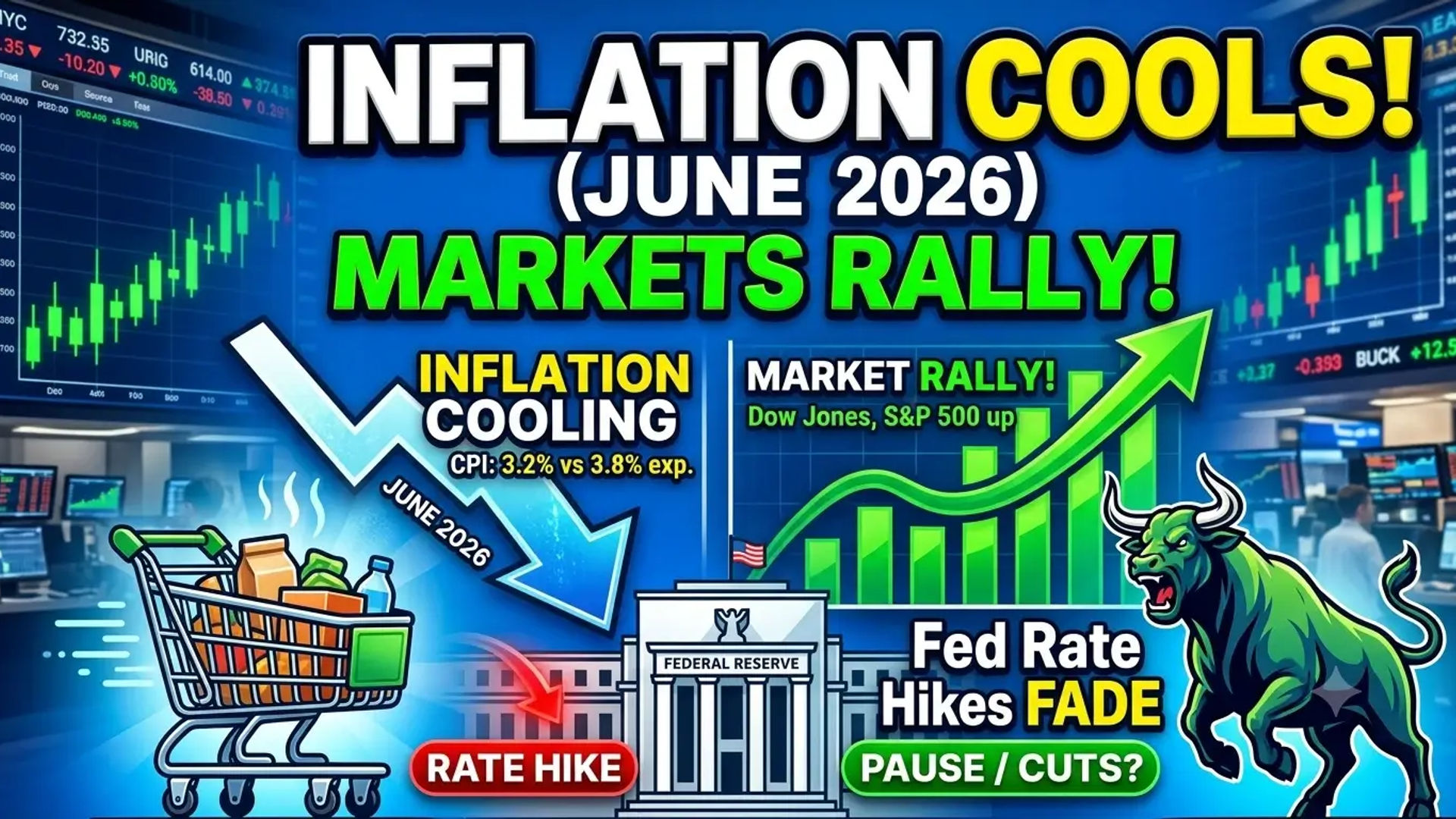
The U.S. economy received encouraging news in June 2026 as inflation continued to cool, reinforcing expectations that the Federal Reserve may keep interest rates unchanged in the coming months. The latest Consumer Price Index (CPI) data showed that price growth eased compared with previous months, signaling that the central bank's aggressive fight against inflation is producing results.
Investors quickly welcomed the report. Wall Street surged after the release, Treasury yields slipped, and the U.S. dollar weakened slightly as traders reduced expectations for additional Federal Reserve rate hikes this year.
For millions of Americans, slowing inflation could eventually mean lower borrowing costs, improved purchasing power, and greater financial stability.
📊 Inflation Snapshot: June 2026
| 📌 Indicator | 📅 June 2026 | 📈 Previous Month | 🎯 Market Expectation |
|---|---|---|---|
| 💰 CPI (Year-over-Year) | 3.5% | 3.8% | 3.6% |
| 🏦 Core CPI | 3.7% | 3.9% | 3.8% |
| 📊 Monthly CPI | 0.2% | 0.3% | 0.2% |
| 📉 Inflation Trend | Cooling ✅ | Rising Earlier | Positive 👍 |
Inflation Continues Its Downward Trend 📉
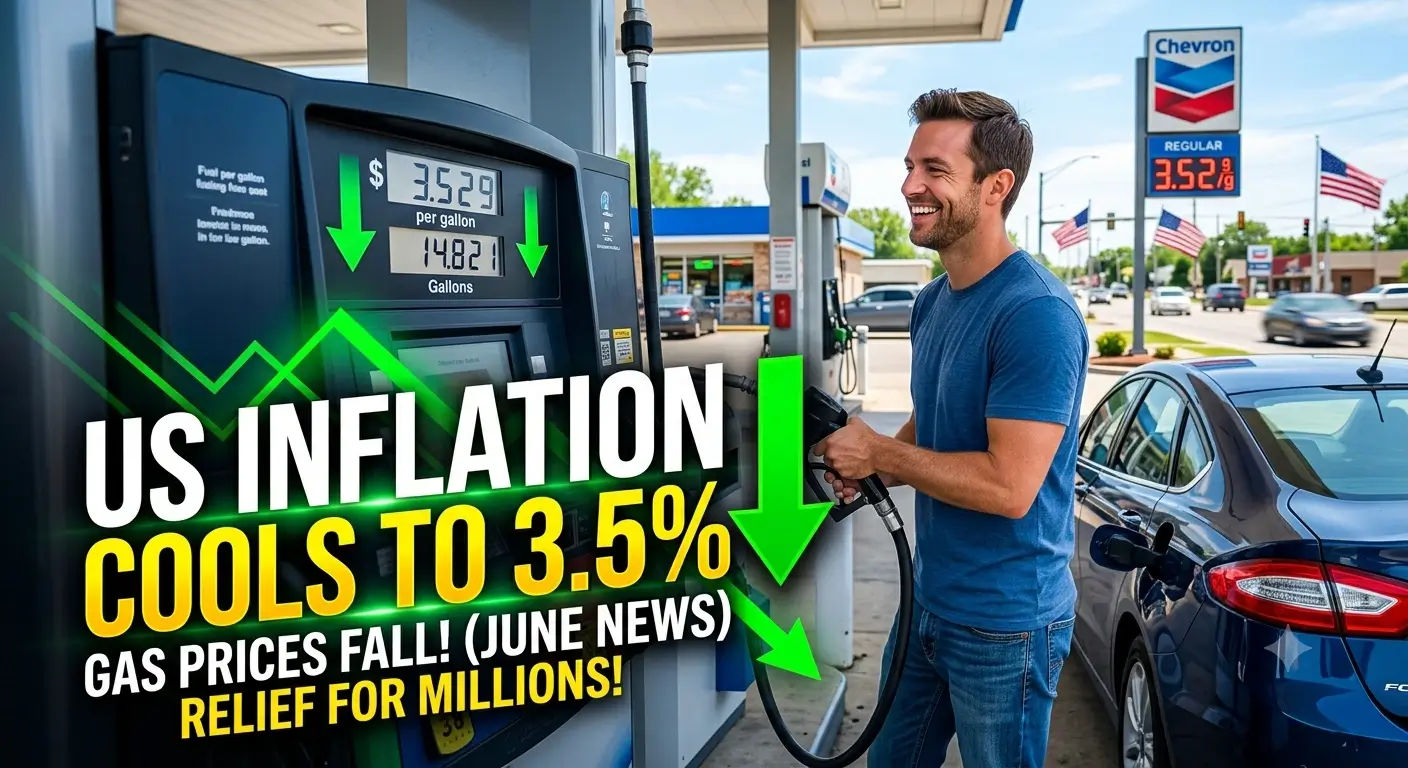
June marked another month of easing inflation, extending a trend that began earlier this year. Falling prices for gasoline, used vehicles, and several consumer goods helped offset continued increases in housing and healthcare costs.
Economists say this steady decline suggests that the economy is gradually returning to more stable price growth after years of elevated inflation.
Lower inflation is especially important because it restores consumer confidence while allowing businesses to plan future investments with greater certainty.
Wall Street Reacts with Strong Gains 📈💵
Financial markets responded immediately after the inflation report.
Major U.S. stock indexes posted strong gains as investors anticipated a friendlier interest-rate environment.
Technology companies led the rally because lower interest rates generally improve valuations for growth-focused businesses.
📈 Market Performance
| 📊 Index | 📈 Daily Change | 📍 Market Signal |
|---|---|---|
| 🇺🇸 S&P 500 | ▲ +1.6% | Strong Gains 🚀 |
| 💻 Nasdaq Composite | ▲ +2.2% | Tech Stocks Lead 📱 |
| 🏦 Dow Jones Industrial Average | ▲ +1.1% | Blue-Chip Rally 📊 |
| 🏢 Russell 2000 | ▲ +1.8% | Small Caps Rise 📈 |
📚 Related Articles

Analysts noted that investors are becoming increasingly optimistic that the Federal Reserve's tightening cycle may be nearing its end.
Why Inflation Is Finally Cooling 🔥➡️❄️
Several economic factors contributed to the slowdown.
Key Reasons Behind Lower Inflation
- ⛽ Gasoline prices stabilized.
- 🚢 Global supply chains continued improving.
- 🏭 Manufacturing costs declined.
- 📦 Shipping expenses remained lower than last year.
- 🛒 Retail discounts increased during early summer sales.
- 🚗 Used vehicle prices softened.
- 💻 Consumer electronics became more affordable.
These improvements have helped reduce overall inflation without significantly weakening the broader economy.
Federal Reserve May Pause Rate Hikes 🏦
Perhaps the biggest takeaway from the report is what it means for Federal Reserve policy.
For much of the past two years, the Fed raised interest rates aggressively to slow inflation.
Now, with inflation gradually approaching its long-term target, many economists believe policymakers may choose to hold rates steady while monitoring future economic data.
Although officials remain cautious, expectations for another immediate rate increase have declined considerably.
Markets now expect the central bank to prioritize economic stability rather than additional tightening unless inflation unexpectedly accelerates again.
What This Means for Everyday Americans 🇺🇸👨👩👧👦
Cooling inflation affects millions of households in meaningful ways.
If inflation continues falling, Americans could begin seeing noticeable financial relief over the coming months.
💰 Potential Consumer Benefits
| 💰 Category | 📈 Expected Impact | ⭐ Consumer Outlook |
|---|---|---|
| 🏠 Mortgage Rates | May Stabilize | 📉 Better Home Affordability |
| 🚗 Auto Loans | Borrowing Costs Could Ease | 🚘 Lower Financing Costs |
| 💳 Credit Cards | Less Pressure if Rates Stop Rising | 💳 Reduced Interest Burden |
| 🛒 Grocery Bills | Price Growth May Slow | 🥦 More Affordable Shopping |
| ⛽ Gas Prices | More Stable | 🚗 Lower Fuel Volatility |
| 👨👩👧👦 Household Budget | Improved Purchasing Power | 💵 Stronger Family Finances |
While prices remain higher than they were several years ago, slower inflation means the pace of future price increases is becoming more manageable.
For consumers, businesses, and investors alike, June's report offers another encouraging sign that the U.S. economy may be moving toward a period of greater stability.
Bond Yields Fall as Investors Expect Lower Interest Rates 📉💵
The June inflation report triggered a sharp decline in U.S. Treasury yields as investors reassessed the Federal Reserve's policy outlook.
When inflation slows, markets often anticipate that the central bank will be less aggressive with interest rates. As demand for government bonds increased, yields moved lower across several maturities.
Lower bond yields generally benefit stock markets because companies can borrow money at more affordable rates, supporting investment and future growth.
Financial analysts noted that the bond market is increasingly pricing in a prolonged pause from the Federal Reserve rather than additional tightening.
Housing Costs Remain the Biggest Inflation Challenge 🏠📊
Despite encouraging inflation data, shelter costs continue to put pressure on American households.
Rent prices and homeownership expenses remain among the largest contributors to overall inflation, although the pace of growth has begun to moderate.
Higher mortgage rates over the past two years have reduced affordability, especially for first-time homebuyers.
🏡 Major Inflation Drivers
| 🏷️ Sector | 📈 Current Trend | 👨👩👧 Consumer Impact |
|---|---|---|
| 🏠 Housing | Still Elevated | High 🔴 |
| 🏥 Healthcare | Gradually Rising | Moderate 🟡 |
| 🛒 Food | Stabilizing | Improving ✅ |
| ⛽ Energy | Declining | Positive 📉 |
| 🚚 Transportation | Moderating | Positive 🚗 |
Economists believe housing inflation may continue easing throughout the second half of 2026, helping bring overall inflation closer to the Federal Reserve's long-term objective.
Businesses Gain Confidence as Price Pressures Ease 🏢📦
American businesses are beginning to benefit from a more stable pricing environment.
Many companies report lower transportation costs, improving supply chains, and reduced raw material expenses compared with previous years.
As production costs decline, businesses may have greater flexibility to invest in expansion, hire additional workers, or maintain competitive pricing.
Corporate earnings guidance has also improved across several industries, contributing to renewed investor optimism.
Sectors expected to benefit include:
- 💻 Technology
- 🏭 Manufacturing
- 🛍️ Retail
- 🚚 Logistics
- 🏦 Financial Services
What Economists Are Watching Next 👨💼📈
Although June's report was encouraging, economists caution that one month of favorable data does not guarantee victory over inflation.
Several upcoming economic indicators will determine whether inflation continues moving lower.
📅 Key Economic Indicators to Watch
| 📊 Economic Report | 📌 Why It Matters | 🎯 Market Focus |
|---|---|---|
| 👷 Employment Report | Measures labor market strength | Jobs 📈 |
| 🛍️ Consumer Spending | Indicates household demand | Demand 💳 |
| 🏭 Producer Price Index (PPI) | Tracks wholesale inflation | Inflation 📦 |
| 🛒 Retail Sales | Reflects consumer confidence | Confidence 😊 |
| 🏦 Federal Reserve Meeting | Determines future interest rate policy | Rate Decision 📉 |
If future reports continue showing slower inflation alongside healthy employment growth, confidence in a "soft landing" for the U.S. economy could strengthen.
Outlook for the U.S. Economy in the Second Half of 2026 🇺🇸🚀
The June inflation report has significantly improved sentiment across financial markets.
Many economists now expect the U.S. economy to continue expanding at a moderate pace while inflation gradually moves closer to the Federal Reserve's 2% target.
However, policymakers remain cautious.
Potential risks include:
- 🌍 Geopolitical tensions
- ⛽ Unexpected energy price spikes
- 🌪️ Natural disasters affecting supply chains
- 💼 Labor market disruptions
- 🌐 Global economic uncertainty
If these risks remain contained, the second half of 2026 could mark one of the most stable economic periods since inflation surged earlier in the decade.
💬 Expert Analysis
Economists broadly view the June inflation report as a positive milestone rather than a final victory.
The data suggests that restrictive monetary policy is working without causing a severe recession—a scenario often referred to as a "soft landing."
Financial markets now expect the Federal Reserve to remain patient, allowing previously implemented rate increases to continue influencing the economy before considering additional policy changes.
For consumers, lower inflation means stronger purchasing power over time.
For investors, it signals improving corporate profitability and potentially more favorable financial conditions.
❓Frequently Asked Questions (FAQ)
Q1. What was the U.S. inflation rate in June 2026?
The annual Consumer Price Index (CPI) increased by approximately 3.5%, reflecting continued progress in reducing inflation.
Q2. Why did stock markets rally?
Investors interpreted the inflation report as reducing the likelihood of additional Federal Reserve interest rate hikes.
Q3. Will mortgage rates fall immediately?
Not necessarily. Mortgage rates depend on multiple factors, including Treasury yields and broader financial market conditions, but slower inflation may help stabilize borrowing costs.
Q4. Is inflation completely under control?
No. Inflation has eased significantly but remains above the Federal Reserve's long-term 2% target.
Q5. What sectors are benefiting most?
Technology, retail, manufacturing, transportation, and financial services have shown positive market reactions.
📌 Conclusion
The June 2026 inflation report delivered another encouraging sign that the U.S. economy is moving toward greater price stability. With inflation easing, investors growing more optimistic, and expectations for additional Federal Reserve rate hikes fading, financial markets responded with broad gains.
While challenges remain—particularly in housing and global economic uncertainty—the latest data suggests the Federal Reserve's efforts are making meaningful progress. If inflation continues to decline and economic growth remains resilient, the United States could be on track for a more balanced and sustainable expansion in the months ahead.